Newsletter
Shut off Moratorium Ends – What’s Next?

Water Affordability

Authored by

Newsletter: Winter 2022-2023
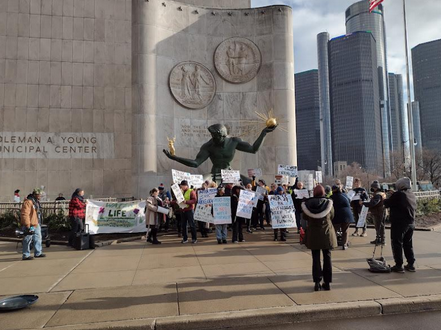
The Moratorium on water shut offs, put in place at the state level during the pandemic, ended in Detroit on December 31, 2022. Other communities, such as Hamtramck, Oak Park and Hazel Park already restarted shut offs. Water shut offs in Detroit have been a problem since 2004. Protests began then and have continued to this day. The pandemic created a public health crisis that could not be ignored so the moratorium was put in place as a temporary solution at the state for three months and then extended in Detroit till recently.
It is estimated that well over 140,000 households in Detroit have had their water shut off at one time over the years as rates rose, infrastructure crumbled, and the tax base eroded. Private entities have gradually taken over parts of the public water system in Michigan communities. Detroit basically lost control of its own water system during bankruptcy, under a state appointed Emergency Manager and the takeover of the city’s finances by the state.
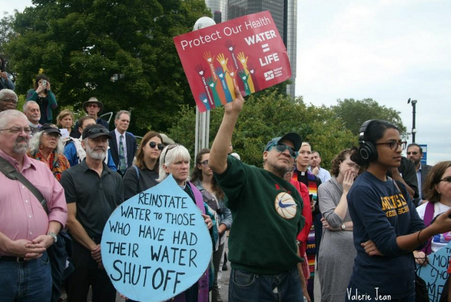
Affordability has been an issue for a long time. The disruptions from the advent of Emergency Manager control over assets, bankruptcy, and the creation of the Great Lakes Water Authority that shifted control to the outlying communities all put an extra burden on Detroit water users just as the pandemic took over. It was a perfect storm for a city already dealing with poverty, racism, and economic upheavals from the loss of industry.
Detroit came up with the Lifeline Plan in June. (After no consultation with the Detroit People’s Water Board Coalition which has been fighting these issues for years.) It has limited features of an affordability plan, but falls far short and it’s temporary, due to lack of funding. It has replaced its Water Residence Assistance Program (WRAP). It certainly has some good features, and the 60,000 residents currently threatened with shut offs for being behind on their bills are being encouraged to sign up soon.
- It includes a guarantee that those who sign up will not have their water shut off.
- There is a tiered payment level attached to household income, starting at $18 per month.
- All past water bills are forgiven.
There are some serious downsides to this plan:
- First of all it is a rationing plan that will punish larger families. Once a household uses 4,500 gallons of water in a month, the amount used over the limit will be charged at the higher rate. Studies show the average use for an individual is 3,045 gallons per month. Average household in Detroit is 2.53 people. The pandemic forced households to combine. So the poorest with large families will still be burdened with high bills.
- There is the additional problem that many are unable to qualify or sign up.
- Rules require a steady income with a paycheck, no gig work.
- There are few sign up sites and the phone waits are long.
- You must have a Social Security Number and have the card with you, so no undocumented and no immigrant parents quality.
- You must show a lease or property document.
- In other words the system still punishes those who probably most need the help.
- The most significant downside to the Lifeline Plan is that the federal funding for it runs out in 18 months. There is no long-term plan for funding.
It is essential that a dedicated fund be developed at the state level to ensure the vulnerable in every Michigan household have their basic need for water met. Mayor Duggan has requested state funding but is the Lifeline Plan the kind of plan the state should fund? It is a rationing plan that burdens some of the most vulnerable, some of the poorest of the families in Detroit. Detroiters need a real affordability plan, as do other vulnerable residents in the state.
Water is a human right. It cannot be withheld from anyone simply because they can’t afford to pay a high rate for it. It is essential that legislation at the state level be in place to guarantee this right and fund it. We encourage our members and allies to get behind the water bills being reintroduced in the new legislature which secure the human right to water and sanitation once and for all.
Water Affordability – Not Water Assistance Programs
Water assistance programs such as the WRAP programs of southeast Michigan are generally limited to temporary financial assistance on water bills and sometimes help with plumbing repairs. When a household has used up the assistance for the year, they are often back where they started, unable to pay their water bills. Water affordability plans are usually tiered, based on income, and they are ongoing. The UN recommends that an affordable water bill be no more than 3% of a household’s income. It’s called an affordability plan because the household would be able to pay their bill each month. It is affordability plans we should be fighting for, not merely the band-aid of assistance plans.
Oakland County Water Resources Commission conducted a study on water affordability programs for over a year to address the crisis of affordability of water in Royal Oak Township and Pontiac with a view of providing a template for other communities in Michigan. Stakeholders provided much input with monthly meetings. The program, which was implemented in October, is called Water Residential Assistance Program Income-Based Plan or WRAP IBP. Water bills are based on household income and the previous annual water bill. The aim of the program is to ensure that a household’s water bill is no greater than 3% of its income. It has no rationing component. The program, which began in October, will last for two years and will continue depending on available funding. In the final report, Commissioner Jim Nash concluded:
“…that for an affordability plan to be successful anywhere, especially in overburdened communities, we must have statewide legislation to support it. We are asking legislators to approve a small fee of just 33 cents per month on everyone’s water bills to contribute to a state administered affordability fund that provides tiered income based discounts for those least able to pay.”
Share!
Blue Triton Continues with no Monitoring
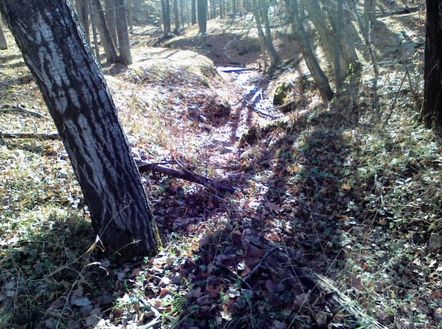
Nothing has changed for two former trout streams in Evart since Blue Triton increased its pumping with the blessing of EGLE. They may have had to give up the attempt to increase pumping to 400 gallons per minute, but the damage had already been done at 250 and nothing has been done to stop it since. Hopefully the new legislature will be able to finally pass new laws to fix the loopholes in our water policies and force state agencies to protect water under the public trust for people and ecosystems.